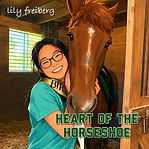
Mirroring Our Emotions


They always say to never get on a horse if you're having a bad day.
Sometimes we don't realize how much our emotions affect our actions... until we get on a horse.
The past few weeks, I have talked broadly about animal behavior, specifically with horses. Understanding the behavior of horses is crucial to anyone who is looking to ride or anyone who is looking to improve their riding ability.
This week, I'll be diving deep into how our emotions truly affect our horses and how they operate.
Check-In
So, everyone — I met my first celebrity crush.
Derek Hough is a six-time "Dancing With The Stars" mirrorball trophy winner, and he's an Emmy-winning choreographer. As someone who comes from a dance background, meeting him and being able to see him perform was a lifelong dream come true.
He is so sweet and so animated when he talks. He's such an interesting person, and he's so talented. Everyone in the show were incredible dancers, and it was such a treat to be able to experience his dance concert.
I quite liked Atlantic City. It's a great city with a lot of things to do. It gave me Santa Monica and Vegas vibes. Gordon Ramsay's Hell's Kitchen restaurant was yummy, and I loved sipping on the piña coladas on the rooftop pool.
I am hopefully coming to a close on the job search soon. I expressed interest in one position, and the next day, I got an interview offer for another position (just my luck). I am keen on giving everyone who wants to talk to me an equal opportunity, so a lot of my week was figuring out how to effectively communicate how life is lifing. By next week, I should have made a firm and final decision on my work life. I'm excited to share more in the weeks to come!
As far as riding goes, I've been out of the saddle for a few weeks due to an injury. I still showed up to my lessons in order to observe my friends, and take in their corrections. But yesterday (typing this on a Friday), I was able to ride. Being back in the saddle felt amazing, even if my rear end is a bit sore from sitting my trot on a bouncy gaited horse.
I surprisingly did better than I thought I was going to be. I remembered the corrections that my trainers have told me on my last ride, and tried slowly applying them or at least thinking about them.
It was almost like riding a bike. It felt more natural than feeling like I took a step back. I'm assuming at least showing up to lessons and observing helped a little bit. It was also a great week for me, so I was in a good mood and eager to get back in the saddle.
My trainer told us last week that we would start learning the fundamentals of jumping soon, so I'm super excited for that.
Horses Mirroring Our Emotions
For the past few weeks, I probably planted a seed in your brains about how horses can sense and mirror our emotions. This is where I'm elaborating on that.
In my first episode with a topic, I talked about confidence. Then, I talked about how to build that confidence into a connection with your horse. Today, I'll be talking about why confidence and connection is important in riding.
It's somewhat a reverse psychology when riding a horse — when we feel out of control, we want to do certain things that we think will put us in control again.
However, when we do these things we think are helping, we find out that they're not useful at all, or in some cases, it puts us in a more dangerous situation.
An example of this would be keeping a tight rein or gripping onto the reins.
We think that keeping a tight rein or gripping onto the one thing our hands are holding helps stabilize ourselves. But in reality, you're hurting your horse and making them uncomfortable. You're allowing them to not listen to you, and in more serious cases, you're giving them a chance to tell you they don't like that and they could rear up or buck you off.
When we're not feeling our best, those underlying emotions travel to your horse. And your horse will then act out upon the emotions that they're sensing from you.
They might tense up when you feel tense. They might act irritated if you're feeling irritated.
My friend rode her favorite horse when something was irking her. Her horse balled up in the canter and he was nippy with her after the lesson.
Houdini tensed up when I tensed up in the canter, which allowed him to take off with me to the point where it was hard to slow him down or stop him.
Freak accidents can happen. Horses can spook over the simplest things and throw you off.
But horses are also natural followers to their riders. They act however you're acting at the time. Horses communicate through actions, so we have to follow suit and use our actions to communicate with them.
So when freak accidents happen, it's important to stay as calm as possible. Tensing up and acting scared will only spook your horse even more.
Additionally, when you're scared, you're disconnecting yourself with your horse at a time when you should be the most connected. It is much harder to get a tense horse back to a calm state when you're tense.
You have to be dominant and assertive with a horse, but you can't be too dominant. You also can't be too easy on them because you're inherently training them to pick up bad habits.
For example, I had trouble getting Chance to move for me. But I was going too easy on him, letting him take walk breaks after a few strides of trotting instead of keeping him moving at the trot.
One day, something just clicked, and I am now able to assert my dominance over him. I still give him scritches and pets, but I'm also showing him that I'm the boss and he needs to listen to me.
So it really is about finding a balance between rewarding them for good behavior, asserting your dominance over them but then also allowing them to move naturally for you.
On the flip side, horses can be naturally calming animals. Horse therapy is a real thing because it allows people to set their worries aside and focus on one thing.
I went through a bad breakup and went to the stables to find some peace.
Chance knew something was up and allowed me to cuddle him. I didn't need to tell him what was going on. He just sensed that I wasn't feeling my best and offered comfort.
This is a rare situation, and it's something that happened because I formed a connection with Chance. I also want to note that I wasn't riding that day, and events would probably be different if I was riding.
The main thing to remember is that it's not all about you when you're riding.
Most people who start out want to think it's all about controlling the animal. Doing this will hurt your horse, as well as teach it habits that put you and other riders in dangerous situations.
You must be able to put the horse first when you ride.
Ask anyone who competes in shows, and they'll tell you that they make everything as normal as possible for their horse because they know if they show any signs of nervousness, their horse will also feel nervous.
Your horse is your dance partner. You are just as responsible for your horse as your horse is responsible for you. If you two aren't in rhythm with each other, it's going to be a bad ride.
Always keep your emotions in check before hopping on a horse, so you're not accidentally putting yourself in a dangerous situation.

Comments